
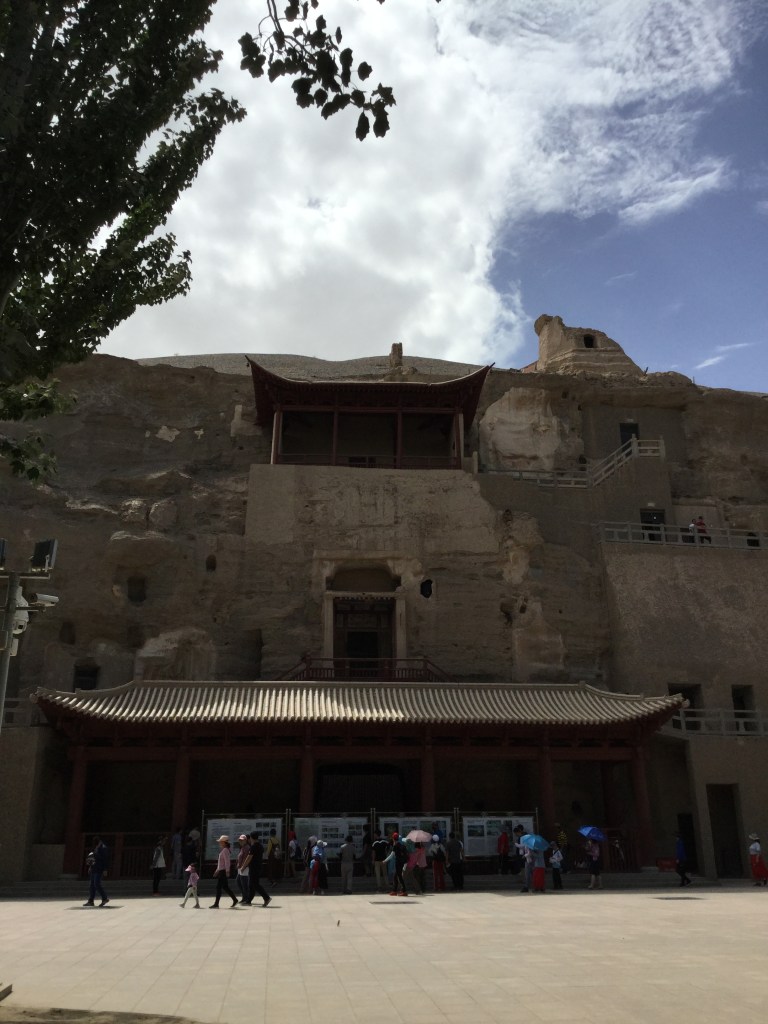
When I arrived in Dunhuang, I had very different expectations. In my head, this place felt like it would be some kind of Chinese Disneyland — overly organized, crowded, and staged for tourists. I imagined wide paths, souvenir shops everywhere, and the feeling that you’re being guided rather than exploring.
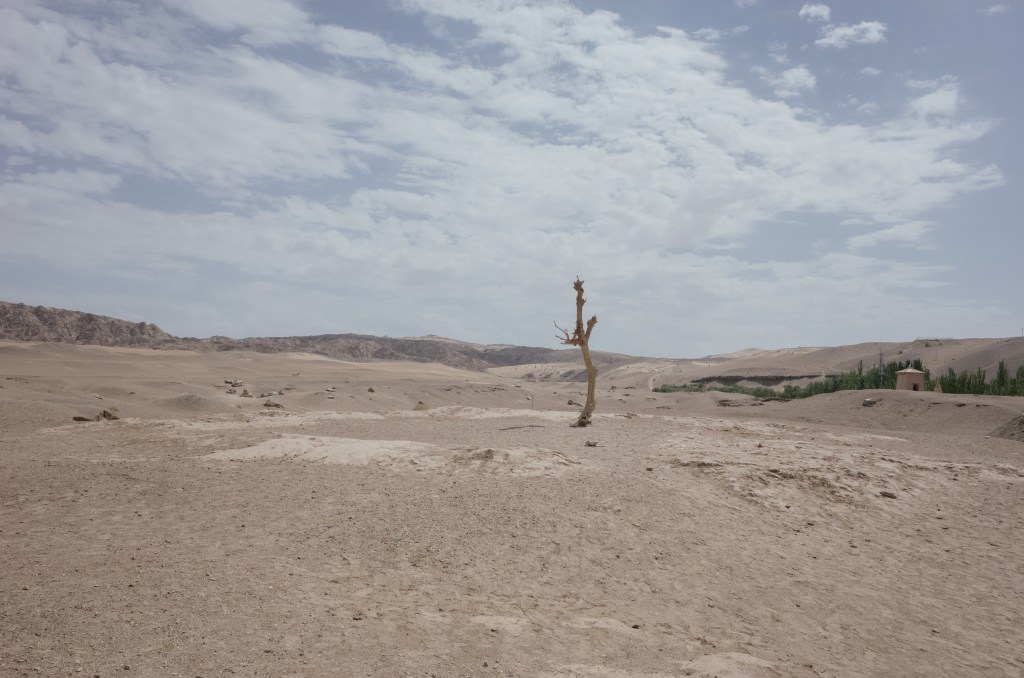
I also thought I would be able to head out on my own and wander freely into the wilderness at the edge of the Gobi Desert, exploring the landscape independently. Reality, however, turned out to be quite different — and much more impressive in its own way.
The Mogao Caves – A Journey Through Time
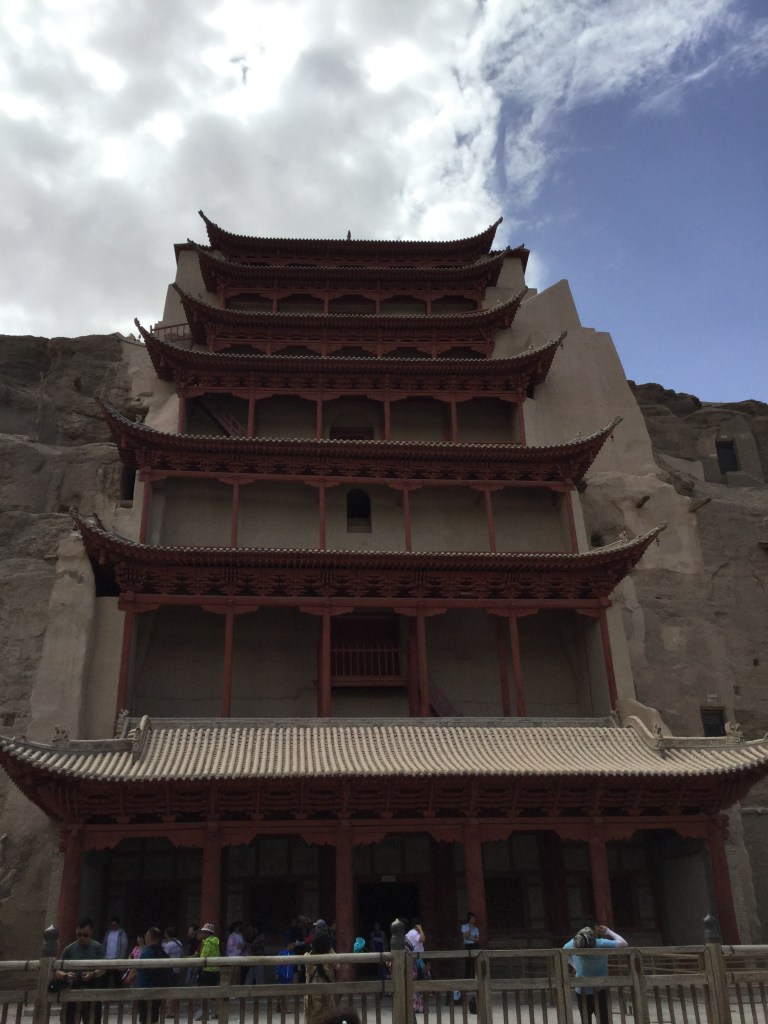
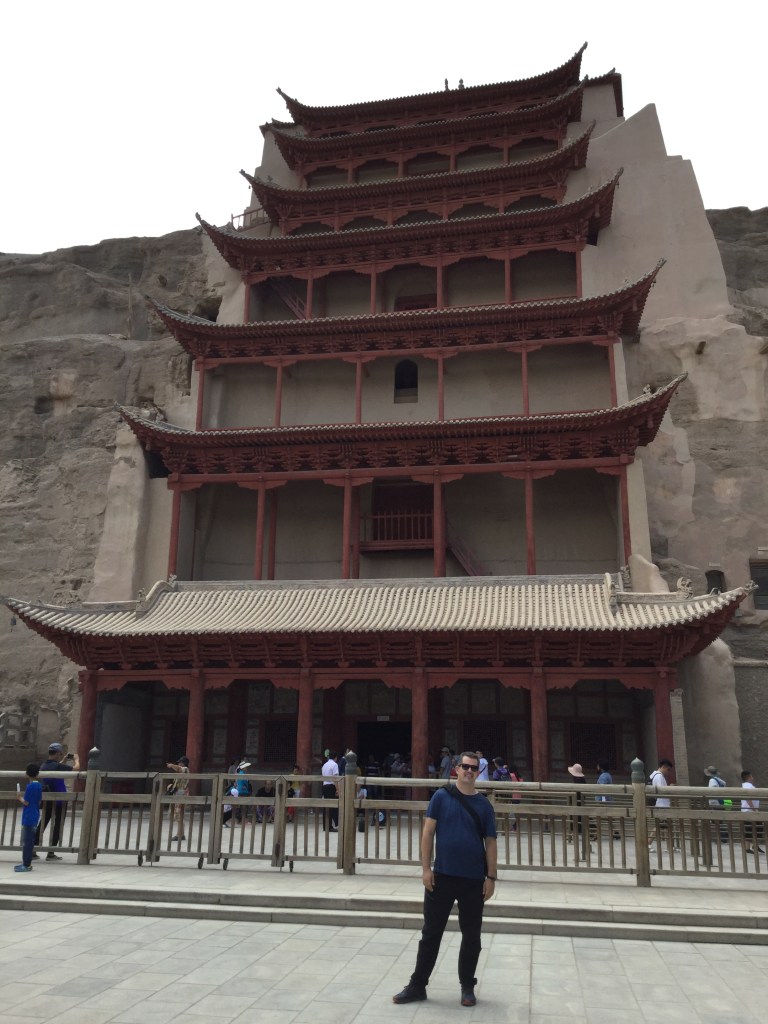
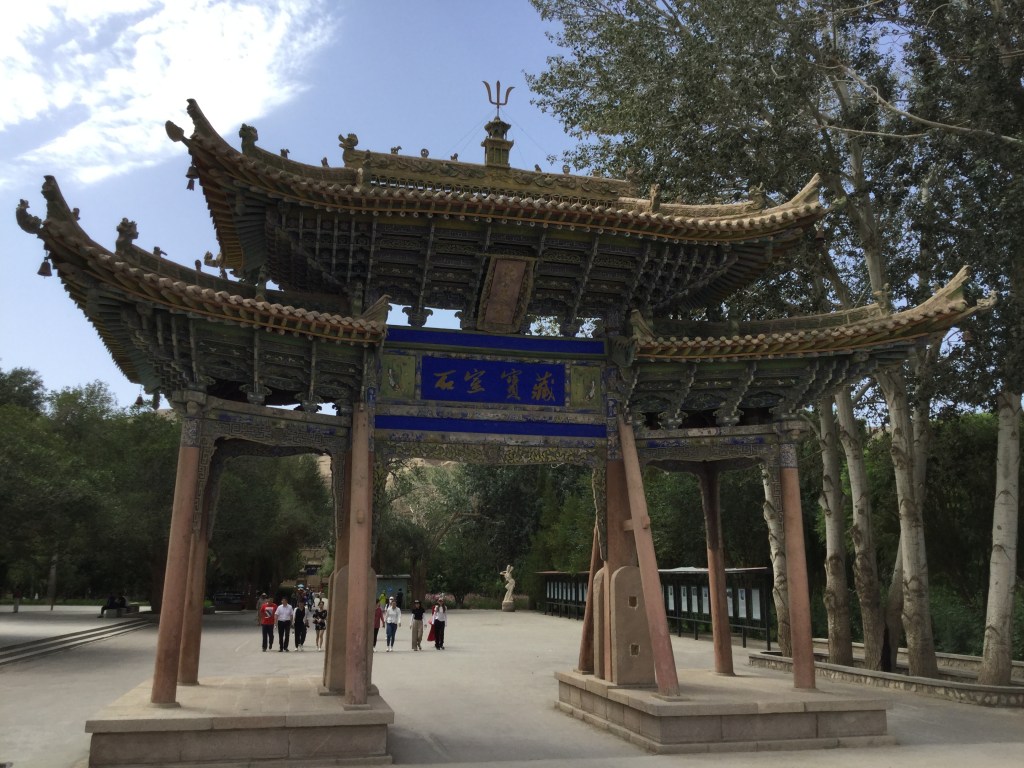
The highlight of Dunhuang is without question the Mogao Caves. Standing in front of this UNESCO World Heritage Site, it’s hard to grasp the scale and historical importance of the place. These caves were carved into the cliffs more than a thousand years ago and served as a spiritual and cultural hub along the ancient Silk Road.
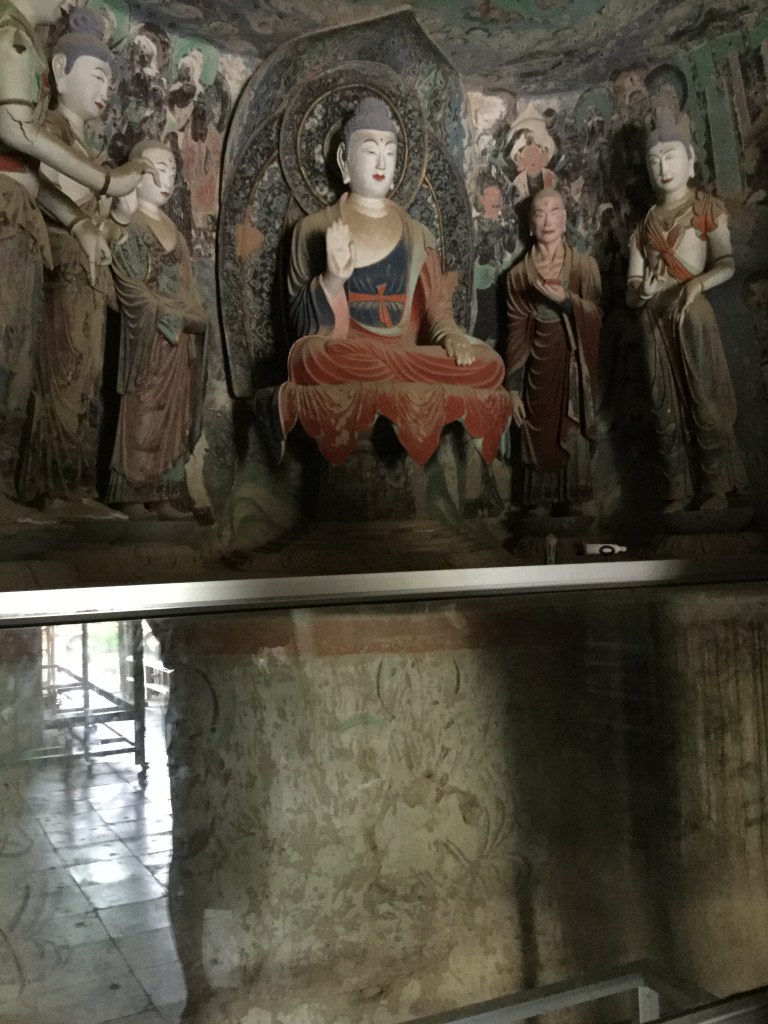
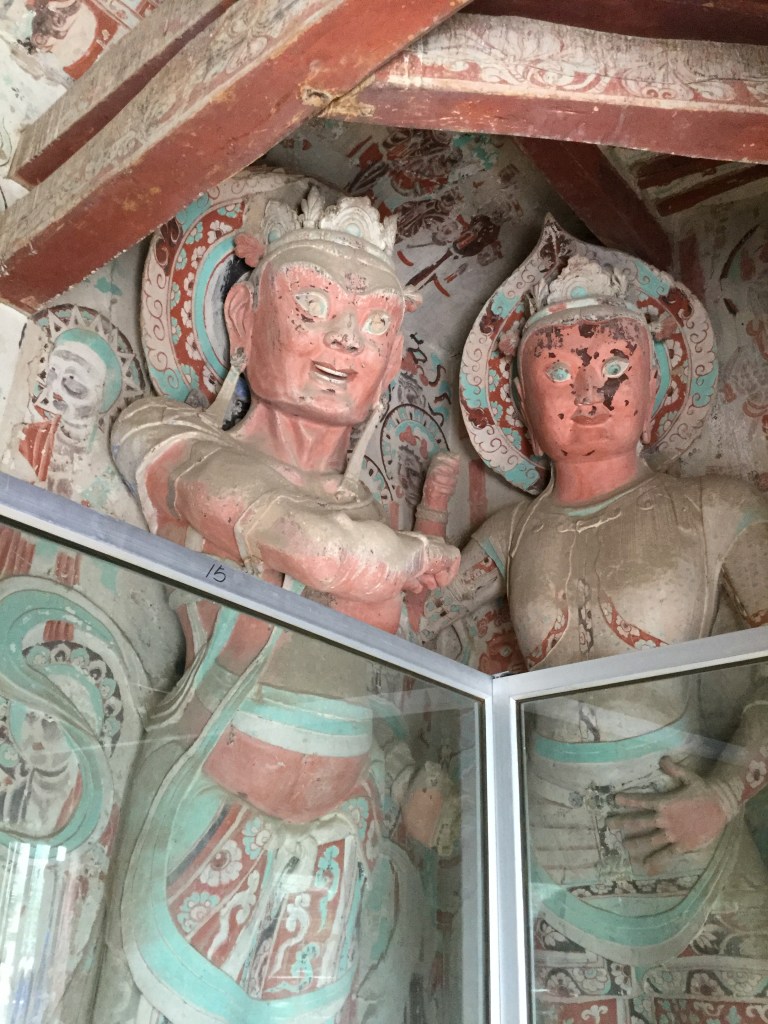
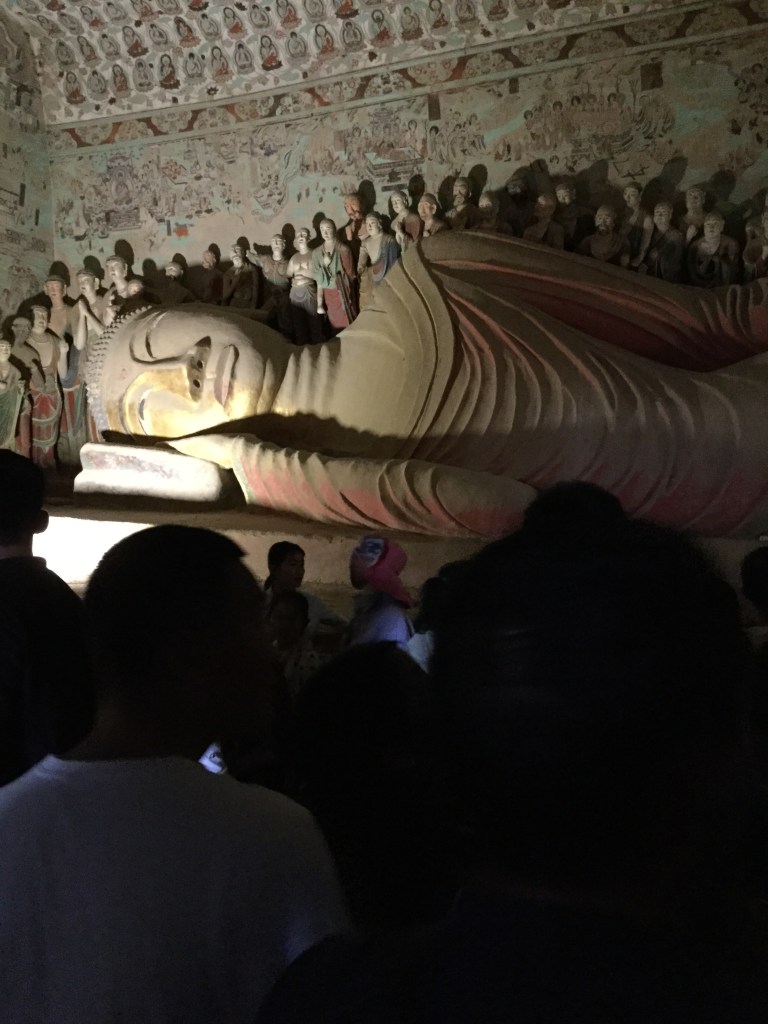
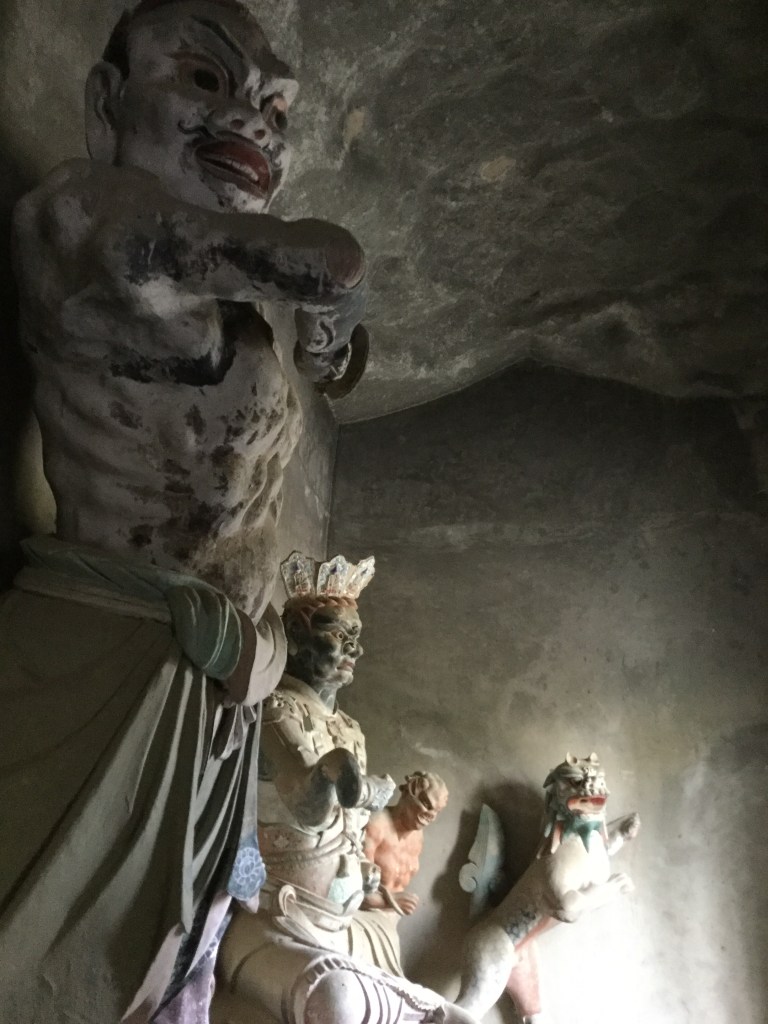
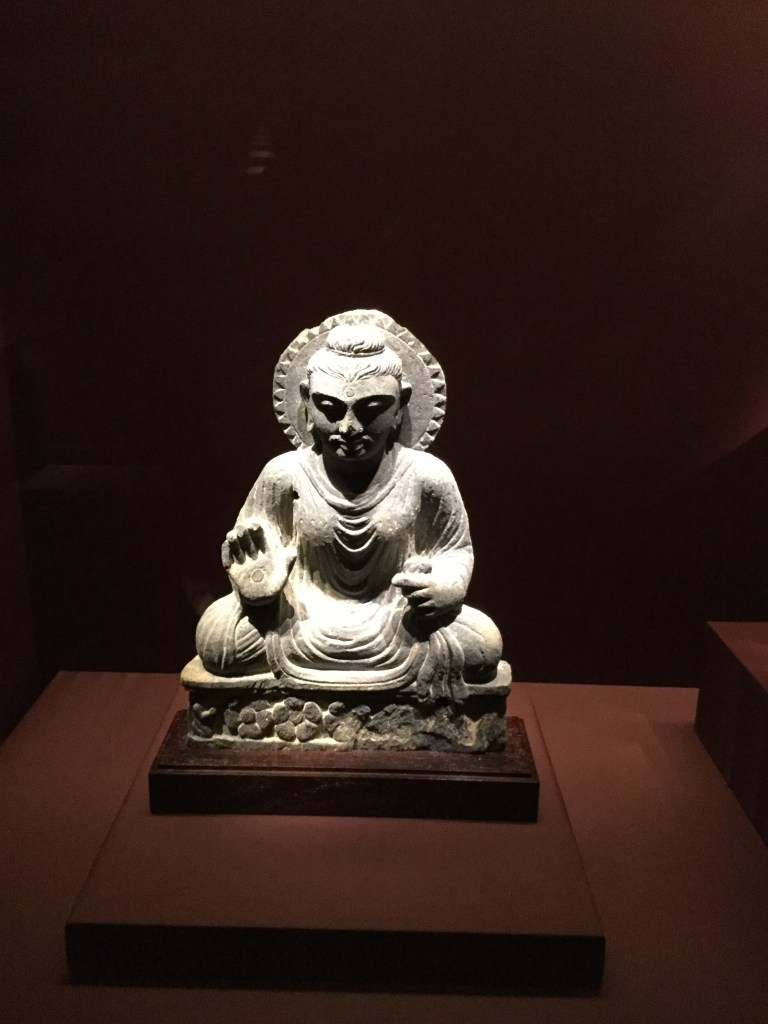
Inside, the caves reveal an incredible world of ancient Buddhist art. The murals are rich in color and detail, telling stories of religion, daily life, and the many cultures that once passed through this region. The exhibition of the old Buddha statues was absolutely fascinating — serene faces, delicate craftsmanship, and a deep sense of history that makes you forget the outside world for a moment.
Walking through with a guide and flashlight, the details pull you in: flying apsaras swirling across vaulted ceilings, serene Buddhas emerging from candle‑lit walls, and layers of repainting that show how different eras, dynasties, and donors left their mark.
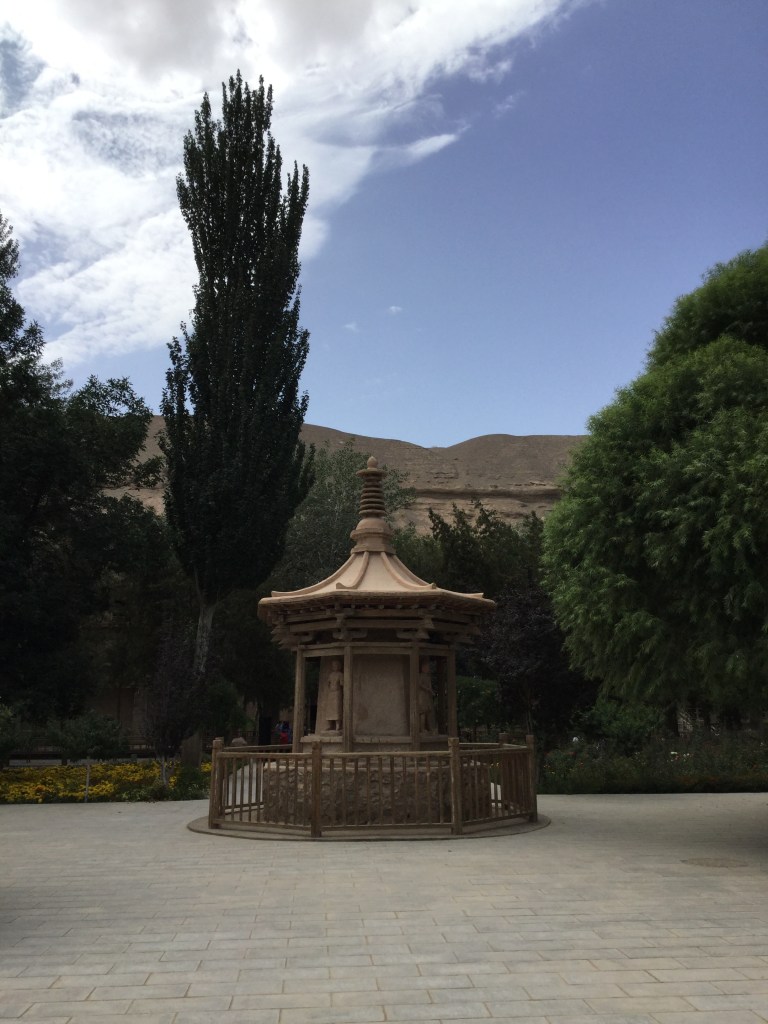
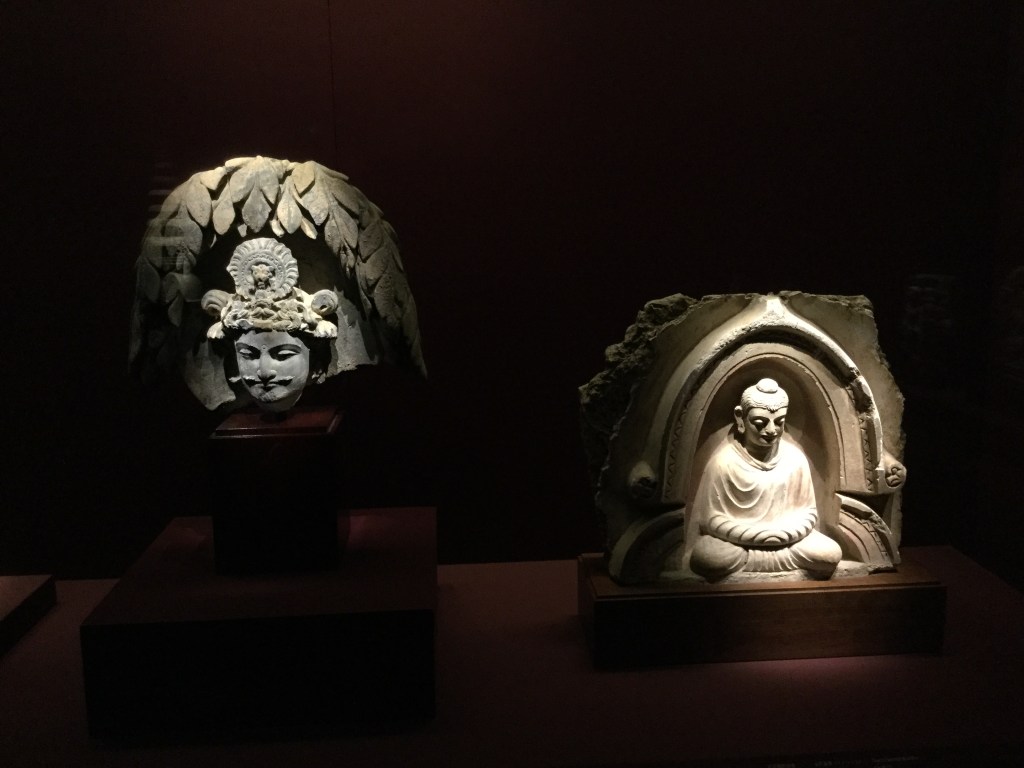
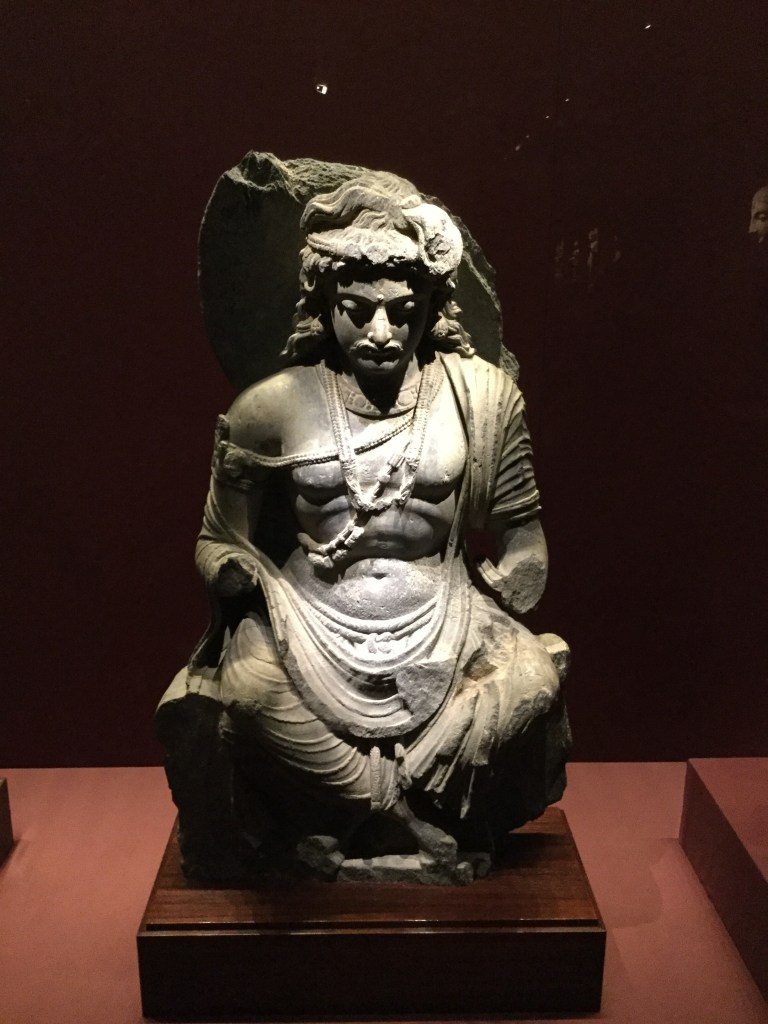
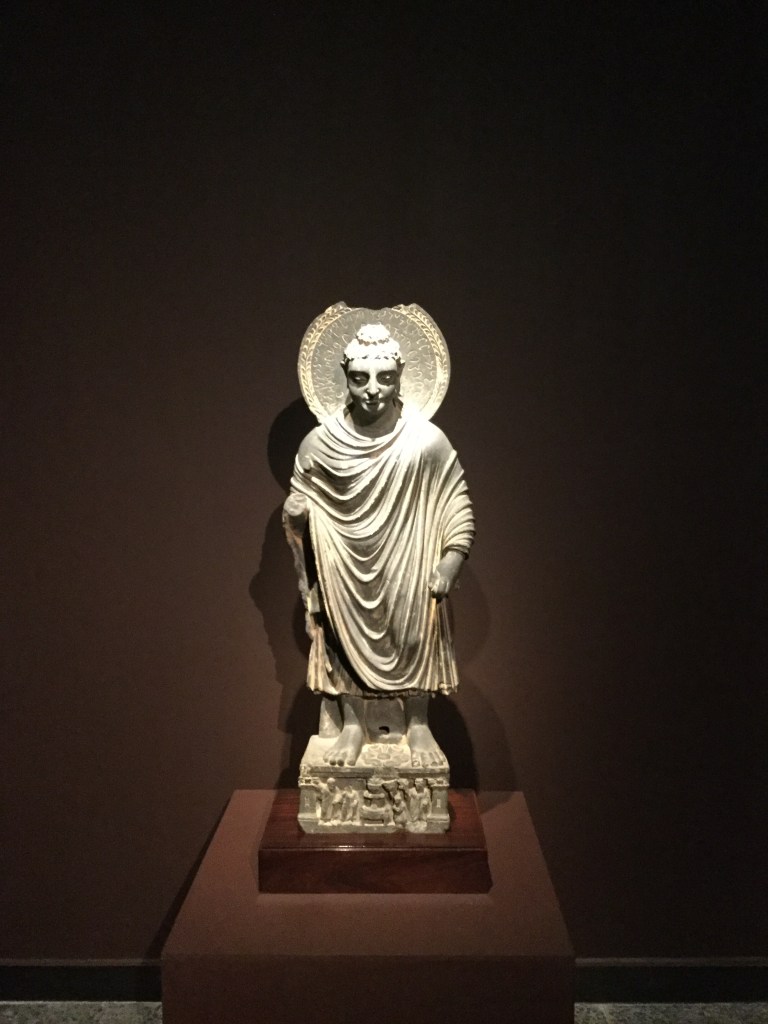
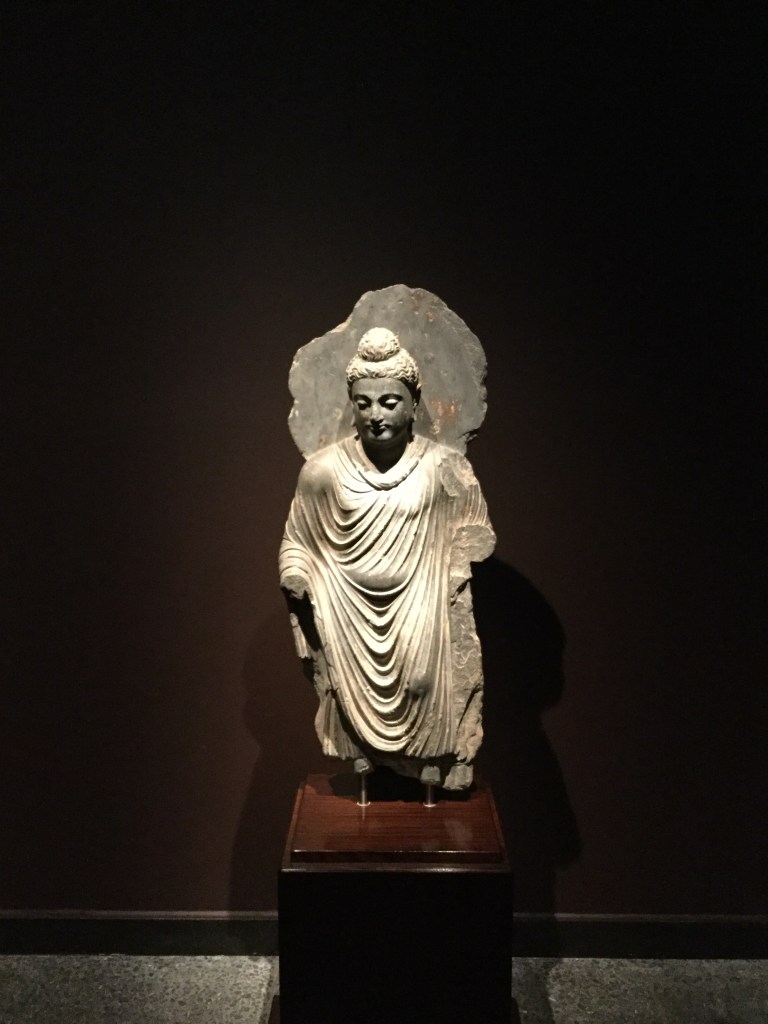
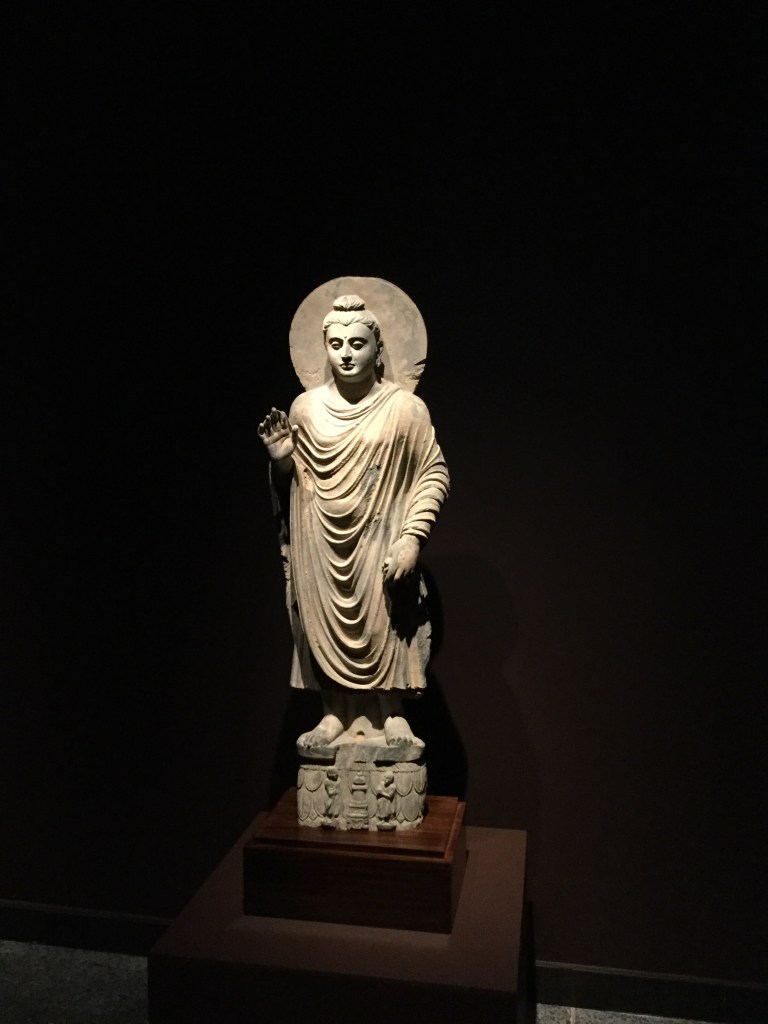
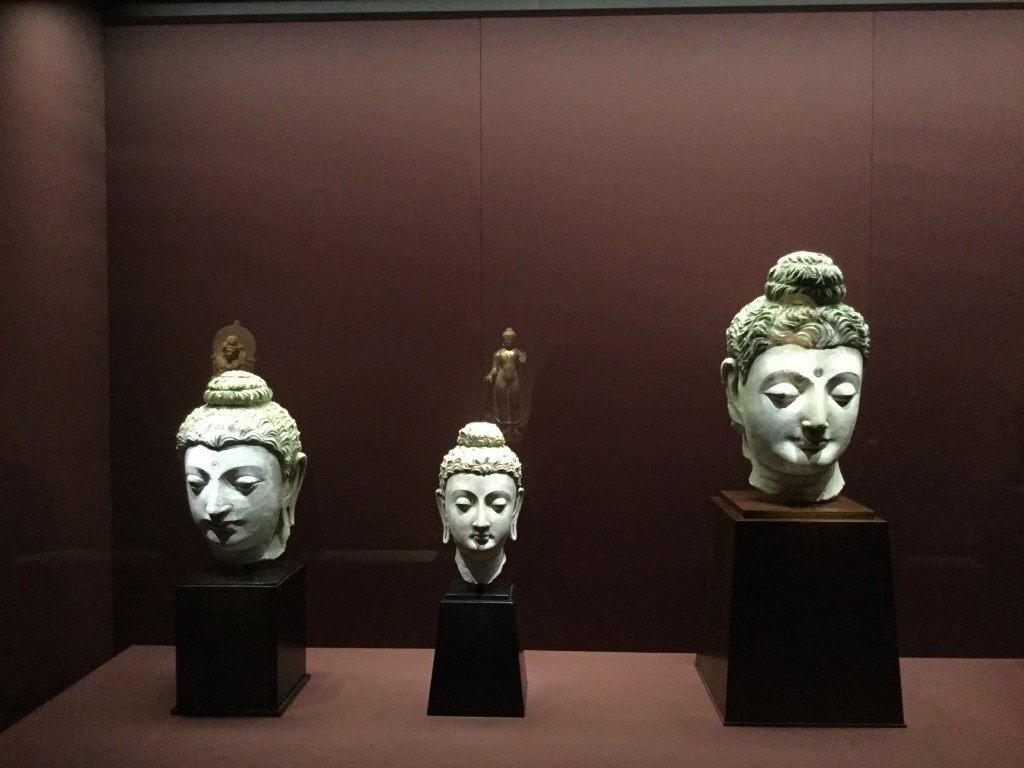
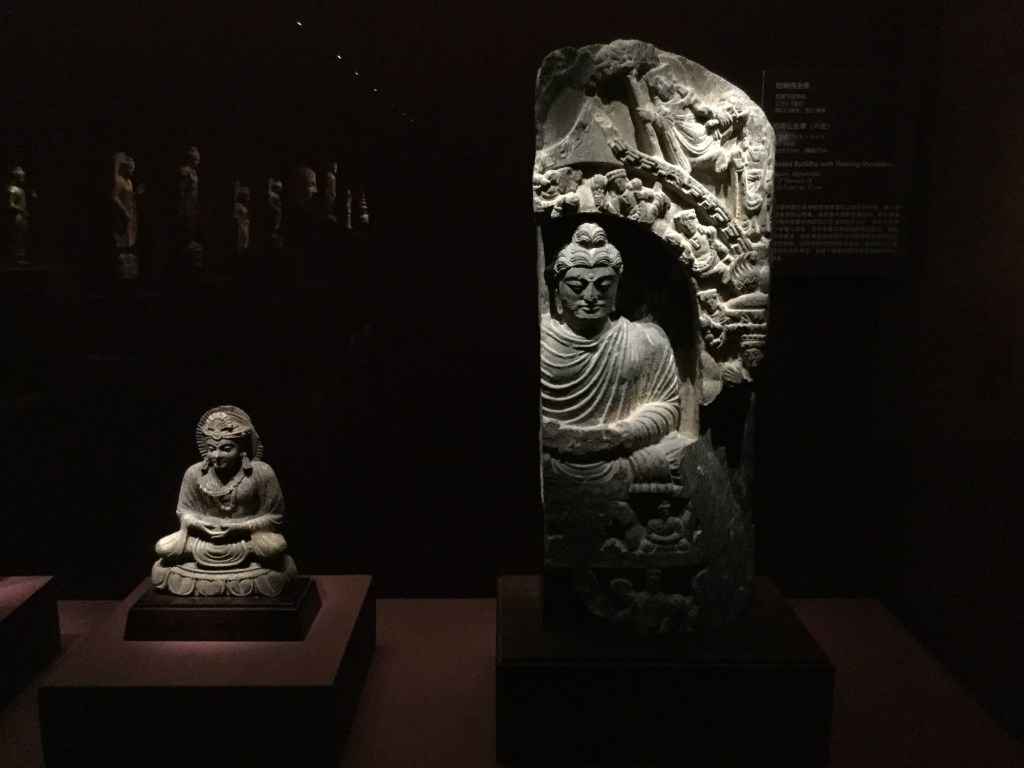
At the end of the official cave tour, the path leads back to the Mogao exhibition center, where the experience continues in a more museum‑like setting. There, among models, replicas and original objects, an exhibition on Gandhara Buddha statues opens another chapter of the story, connecting these caves to a much wider world.
Gandhara: where the Buddha got a face
The Gandhara exhibition at the Mogao center links this desert outpost to a region far to the west. Gandhara was an ancient crossroads in what is now northwest Pakistan and parts of eastern Afghanistan, connecting India, Persia, Central Asia, and even the Hellenistic world as far as ancient Greece.
From around the 2nd century BCE to the 10th century CE, the region produced an extraordinary body of Buddhist art: stone carvings of the Buddha and Bodhisattvas, fragments of stupas, reliquaries, and finely worked gold and silver jewelry. A recent exhibition in Beijing, “Gandhara Heritage Along the Silk Road,” brought together 203 such artifacts, most of them on loan from seven museums in Pakistan, illustrating just how rich and long‑lived this artistic tradition was.
The story of Gandhara is not just about style; it is about routes and relationships. Gandharan artifacts and ideas traveled east into China along at least two pathways: one through today’s Xinjiang and Gansu—the same corridor that leads to Dunhuang—and another, less known route climbing the Indus Valley into the Qinghai‑Tibet Plateau.
Climbing into the sand
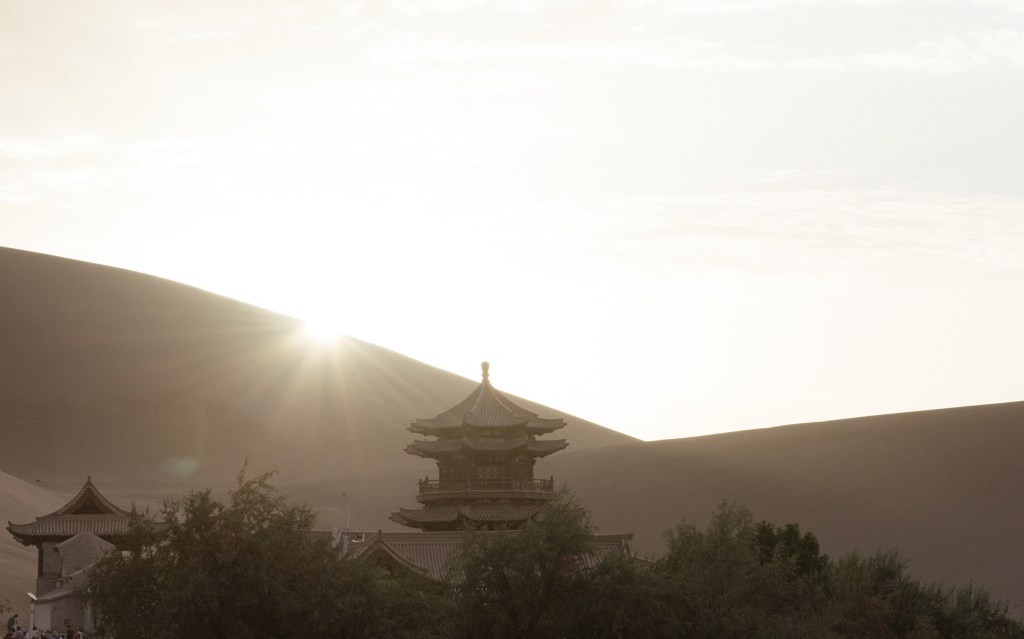
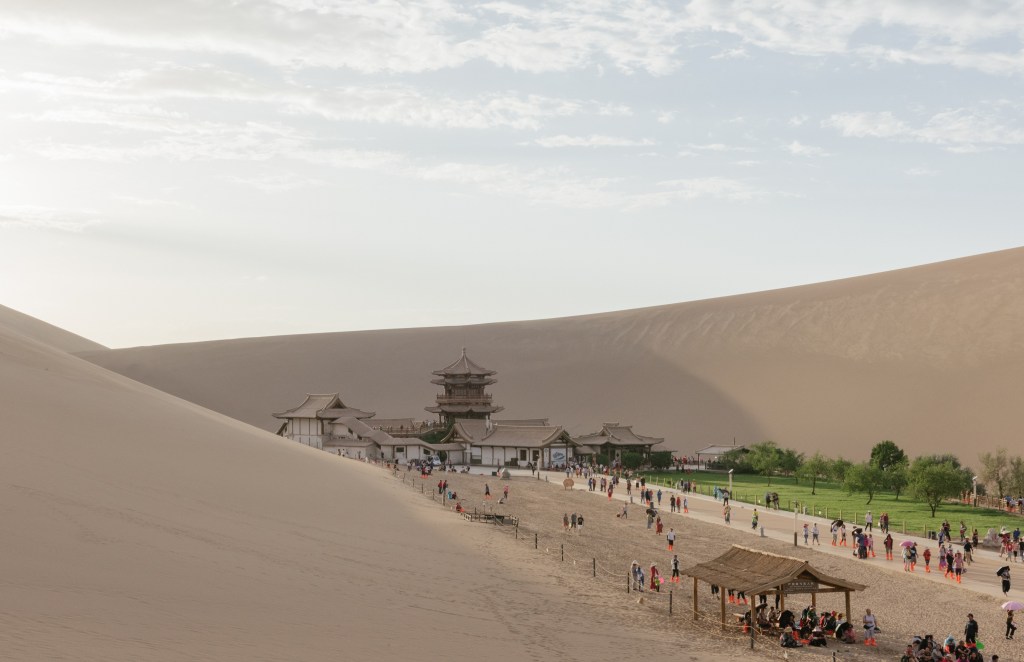
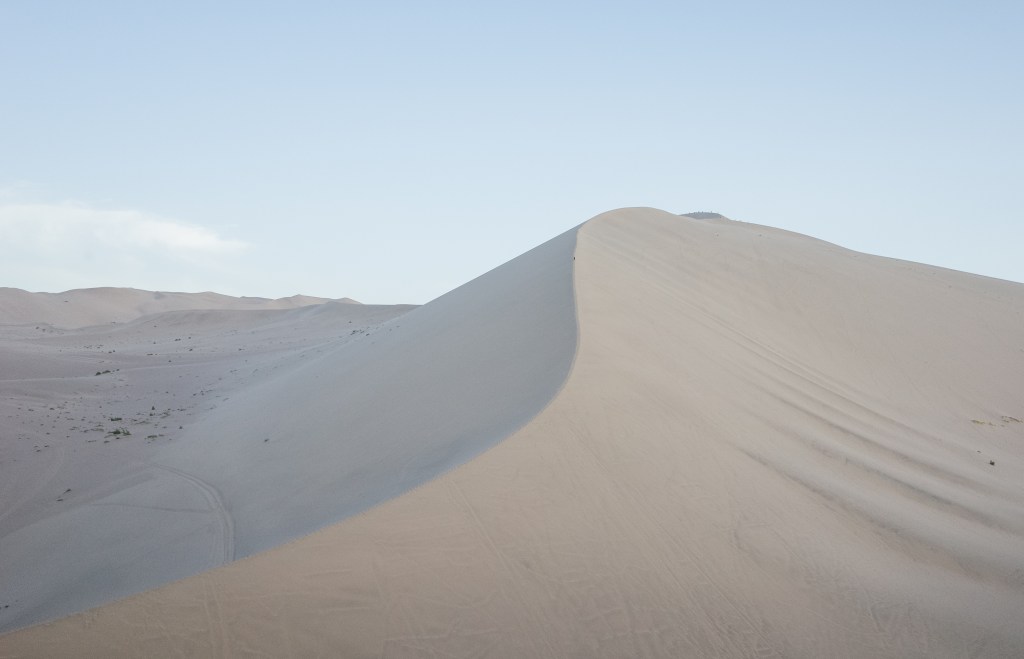
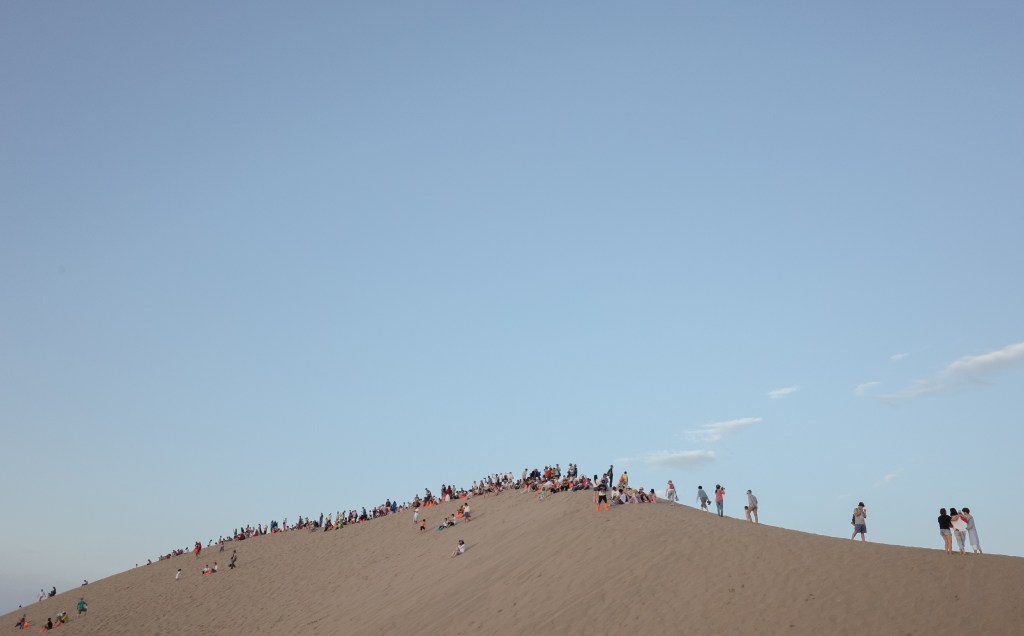
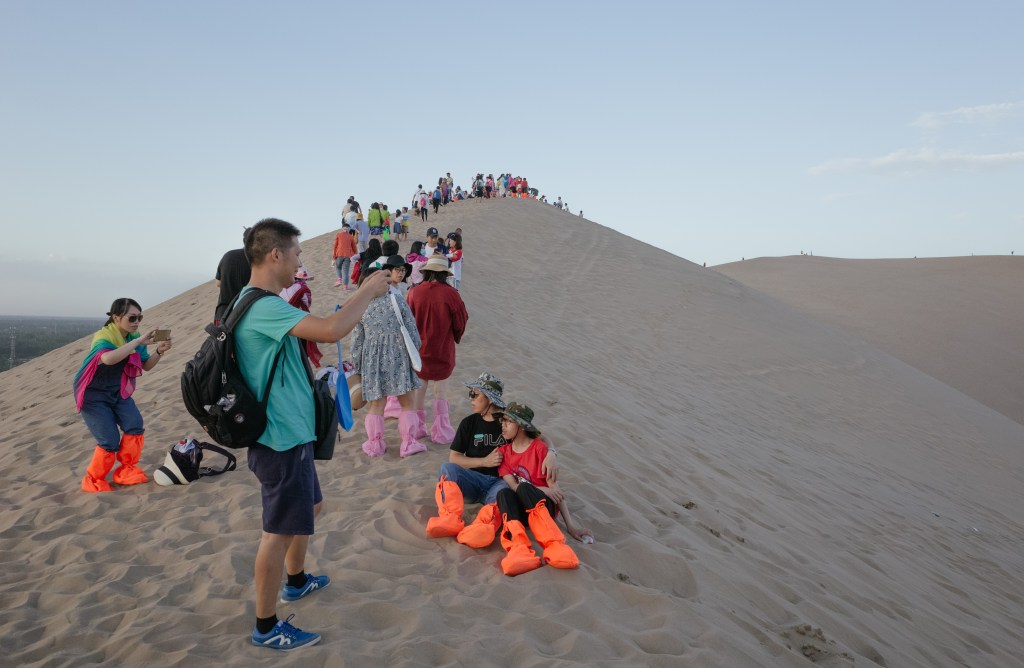
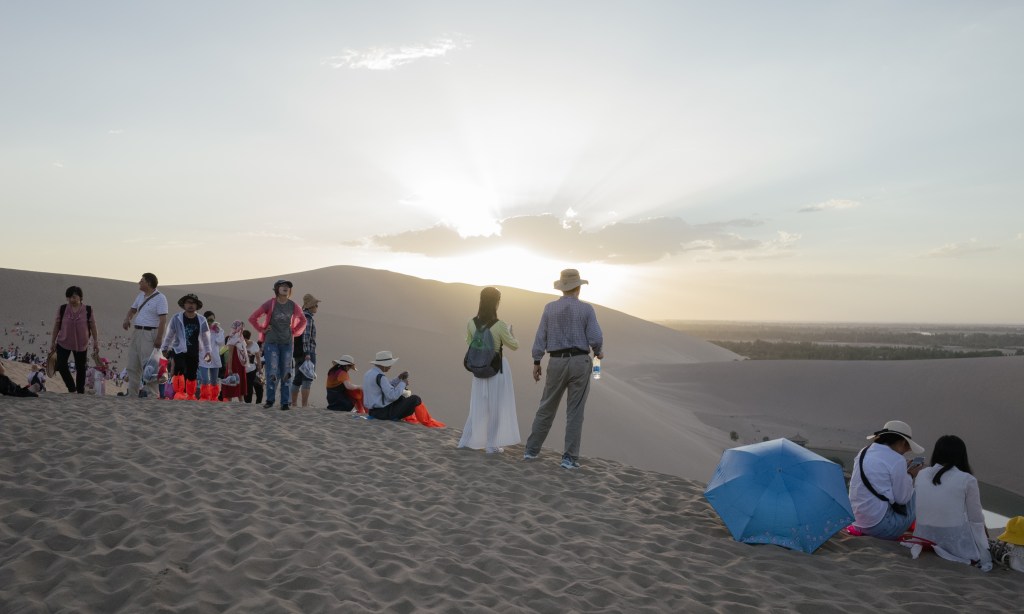
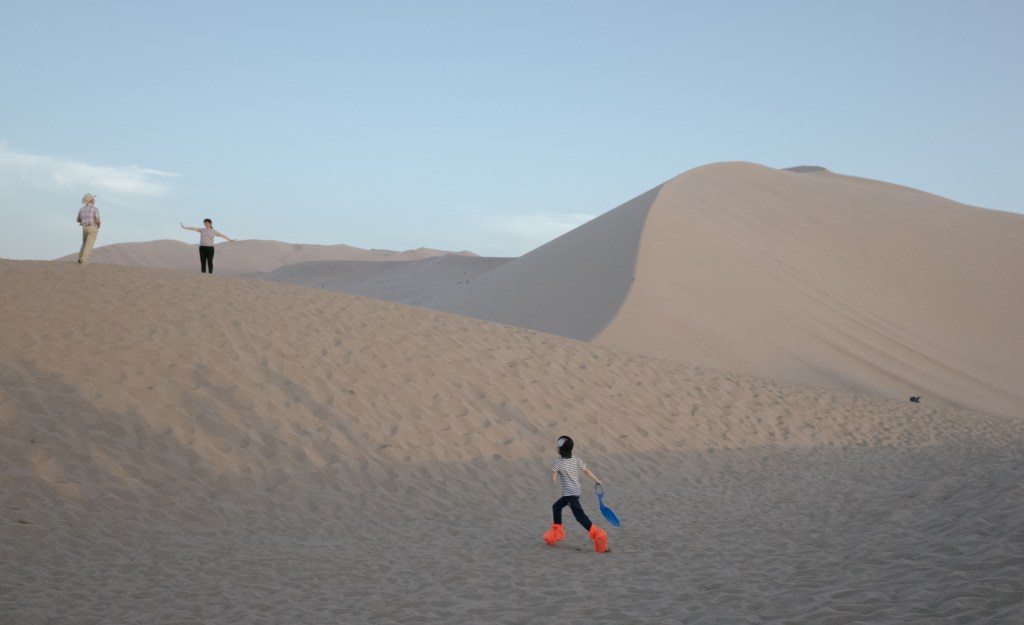
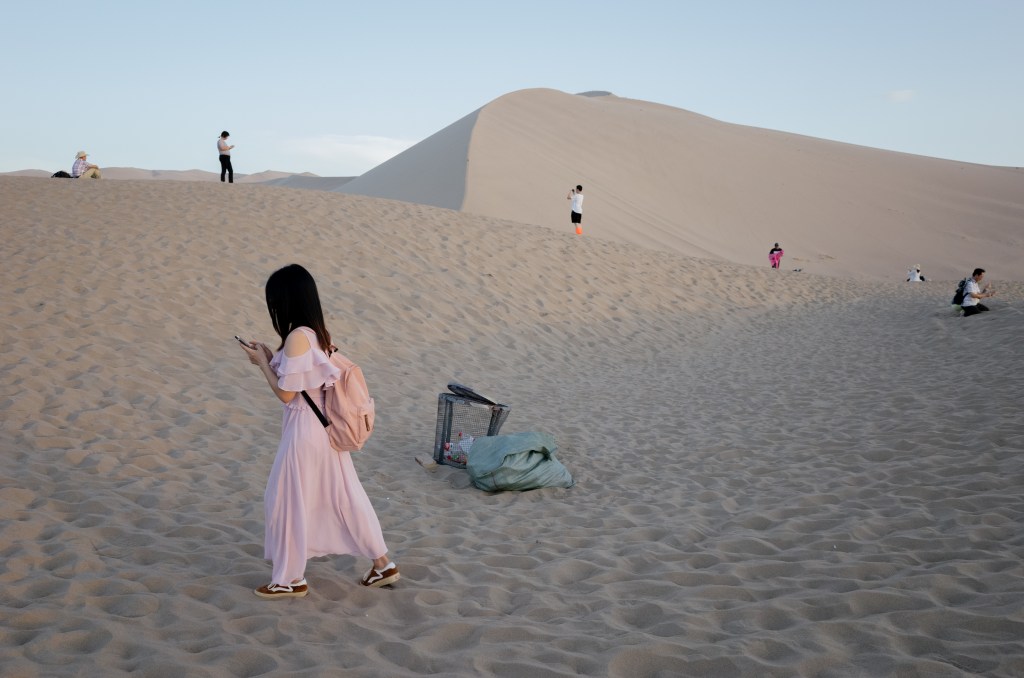
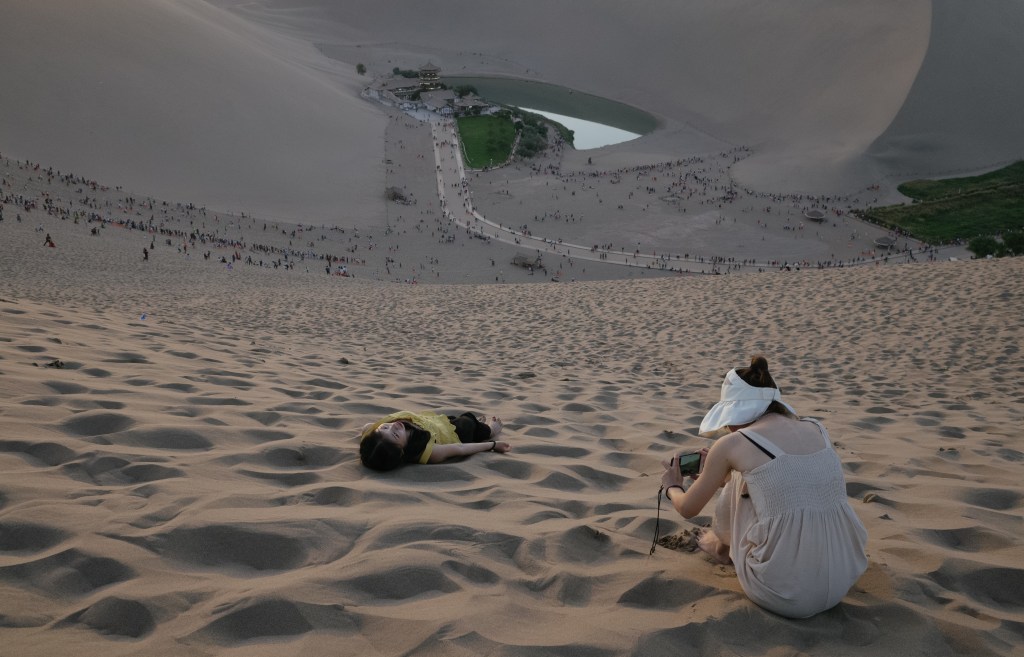
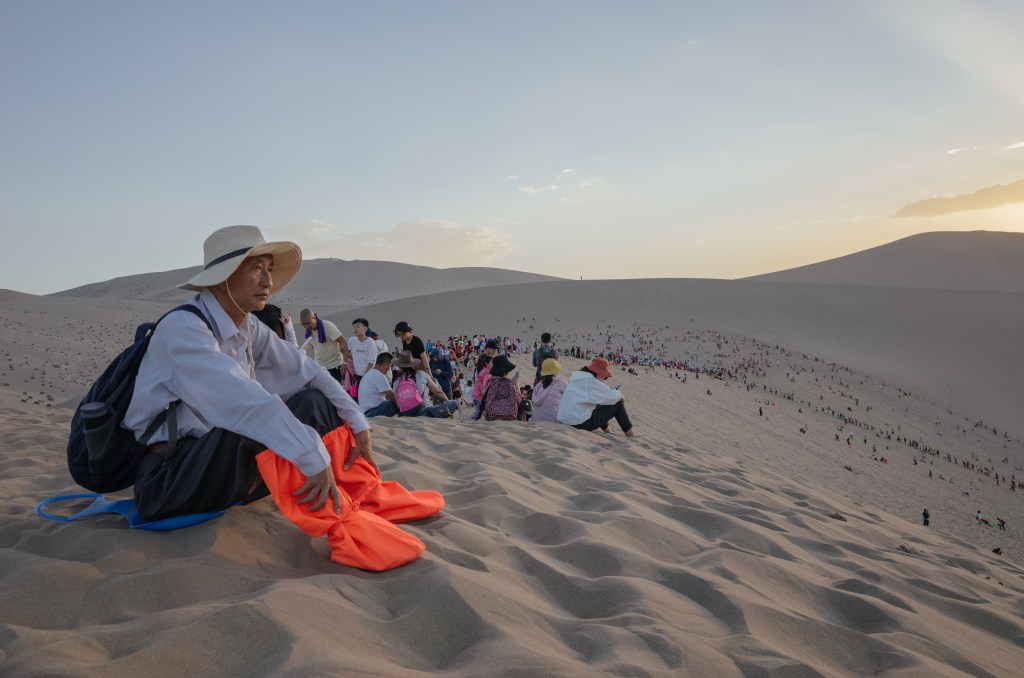
If the caves are about silence and darkness, the dunes outside Dunhuang are about light and exposure. The climb up the desert sand dunes is both simple and brutal: every step slides back half a step, the wind pushes grains into your face, and your legs burn long before the ridge.
But the payoff at the top is real. From the crest you see the line between oasis and desert with startling clarity: the green of Dunhuang on one side, and on the other a rolling sea of sand that hints at the true scale of the Gobi beyond the tourist fences. In that moment, even though you are not truly alone in the wilderness, you still get a glimpse of that vastness you came looking for.
Final Thoughts
Dunhuang wasn’t what I expected — and that’s exactly what made it special. While the area around the Mogao Caves is more structured than I imagined, the depth of its history and the fascinating links between civilizations leave a powerful impression.
From ancient Gandharan artistic roots influencing the Buddhist art here to the vast sand dunes just beyond the city, Dunhuang is more than a travel destination — it’s a place where the movements of people, ideas, and cultures across continents become visible. And even if you can’t roam freely into every part of the desert, the encounters you do have here are profound and lasting.

 Life in Focus: Exploring the Diversity of Cultures Through the lens